Not an excuse

I’ve been troubled by my observations related to “what did not reach us.”
I've come to see that phrase as a way in for Quakers to begin to get past the words that trigger many Friends to shut down any attempts to discuss settler-colonialism and its consequences. I believe that can be a valid approach to help Friends begin to address our current condition as people who continue to benefit from this colonialism. And by extension, as a people who continue this oppression of Indigenous peoples.
But there is the obvious question. Why did this history not reach us?
How did my ancestors, shaped by a testimony against violence, and by sacrifice for it, come to run schools that inflicted it — and then, for generations, not see that they had?
The answer comes from the very story that made Friends proud. That they were the humane alternative to the Army’s brutality and the corruption of the Indian agencies related to Native people. Those were the reasons President Grant cited when he engaged Quakers to become involved in the US government’s actions and policies related to Indigenous peoples, actually calling it his “Peace Policy”, sometimes referred to as “Quaker Policy”.
A narrative of benevolence is an unusually effective concealing device precisely because it is sincere.
Soldiers who kill know themselves to be killing.
Teachers, on the other hand, sincerely believed they were “helping” the Native children by teaching them how to adapt to the encroaching colonial culture. And they felt they could pass that belief, undisturbed, to their descendants.
To me.
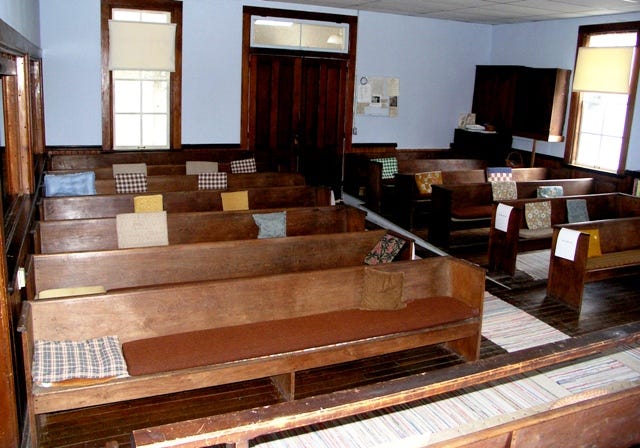
My Quaker meeting, Bear Creek Friends, near Earlham, Iowa